The Revolution Came With Memes, reels, Power Banks and Zero Fear
Well, well, well. Look at us breaking the internet again, and for once, it’s not because a new influencer dropped an overhyped lip tint.
Let’s take a grand, sarcastic stroll down the absolute circus that has been our public examination system lately. Grab your popcorn, because if you don’t laugh at the sheer absurdity of it all, you will inevitably end up crying into your cold chai.
For anyone who was living under a literal boulder, here is the flawless, bulletproof timeline of how our system systematically works its magic. The Great Indian Exam Scam: How Telegram and Tear Gas Are Shaping Tomorrow’s Leaders!
Good evening, desperate aspirants, exhausted parents, and anyone else foolish enough to believe in a meritocracy! Millions of young aspirants pour their blood, sweat, and sanity into test prep. Mental health? Never heard of her! You sit down, stars in your eyes, black ink on your fingers, ready to claim your future.
And then—presto!
Before the official ink is even dry, the question paper magically teleports onto Telegram. Because why settle for an honest fight when a random corrupt middleman can decide who operates on your heart tomorrow?
When the outrage hits, our brilliant officials roll out the classic Gaslighting Phase. They look straight into the camera and assure us everything was 100% secure, dismissing cold hard leaks as “isolated digital alterations.” Ah, comforting!
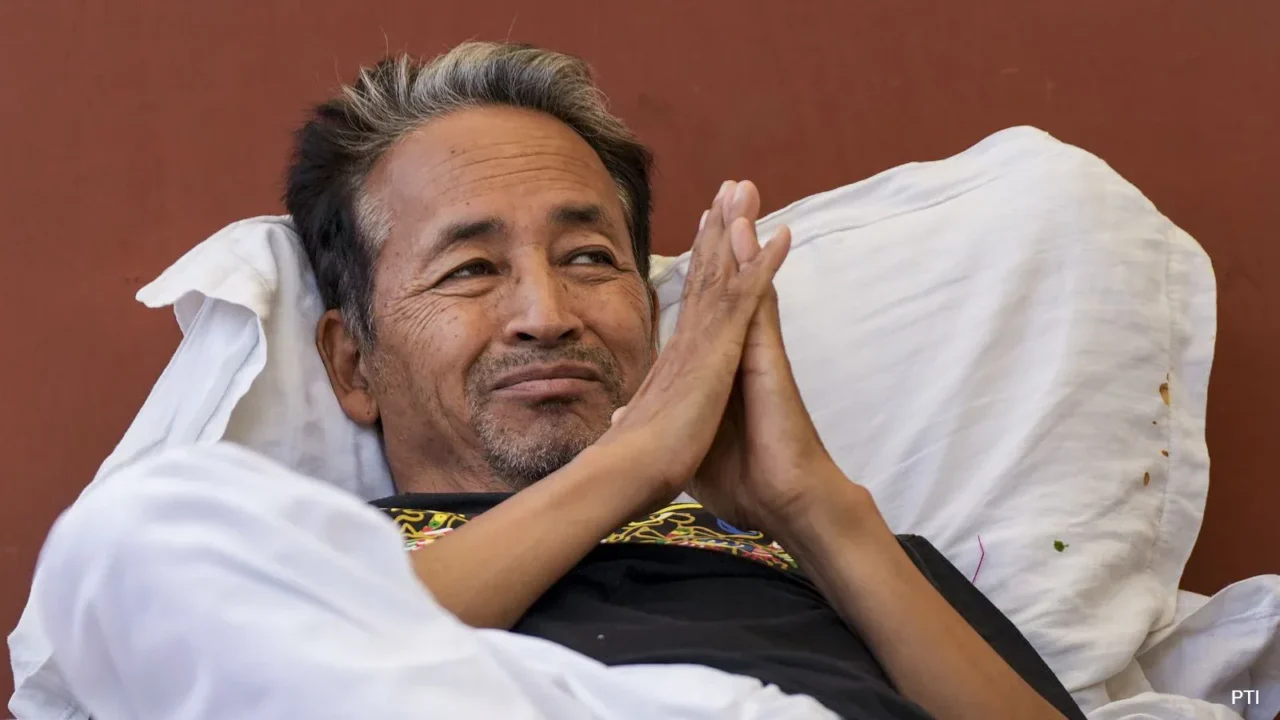
Then comes the inevitable cancellation. Dreams are shattered, education loans stay unpaid, and a broken system drives desperate kids over the edge. And how do the authorities address this tragic fallout? Simple. Activist Sonam Wangchuk has to park himself at Jantar Mantar for an indefinite hunger strike—because that man’s stomach has seen more political resistance than actual Parliament sessions!
When peaceful talks go nowhere, furious students take to the streets. The government’s empathetic response? Barricades, human chains, and heavy lathi charges. Because nothing screams “we hear you” quite like a police baton!
From Exam Leaks to Hunger Strikes: When Democracy Leaves You on ‘Read’
A paper leak exploded into national outrage, and for about five minutes, people genuinely believed accountability was on its way. Cute. Accountability must’ve taken the wrong metro because it never showed up. The headlines cooled down, the outrage got archived, and the system performed its favourite magic trick: pretend nothing happened until people get distracted by the next crisis.
That’s when Sonam Wangchuk stepped in. If the name rings a bell, it’s because Bollywood borrowed his homework years ago. The character Phunsukh Wangdu from 3 Idiots was inspired by him. The only difference? Movies come with background music, emotional speeches, and a guaranteed happy ending. Real life came with bureaucracy, silence, and enough patience to qualify as a national monument.
This is the same man who spent decades building schools, championing sustainable living, and solving real problems while others were busy solving election arithmetic. When words stopped working, he chose the one language governments mysteriously struggle to hear, a hunger strike. As the fast stretched on, so did the silence. Not the peaceful, reflective kind. The official kind. The one where everyone suddenly develops exceptional hearing problems the moment citizens ask uncomfortable questions. So Wangchuk did what every ignored citizen eventually has to do—he stopped talking to the system and started talking to the people.
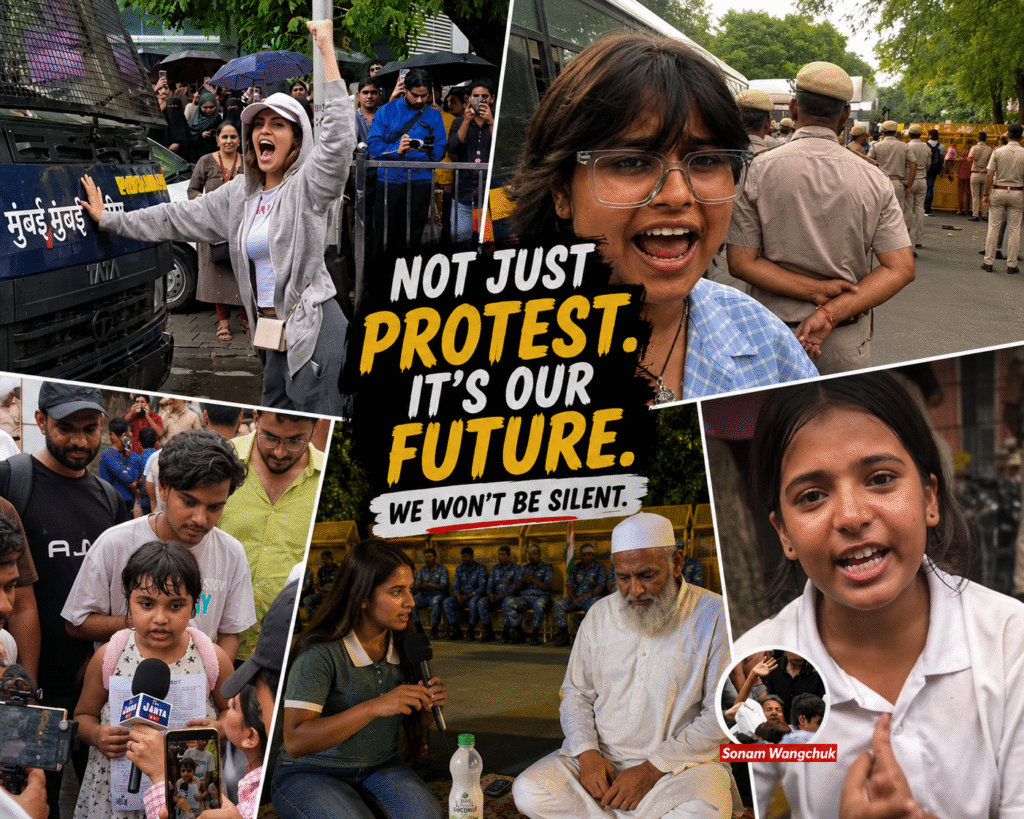
The call for “Sansad Chalo” wasn’t just another protest invitation. It became proof that people hadn’t outsourced their conscience yet. And then came the real surprise. India’s youth said:”say no more, we are onboard..!” Nethier for a concert nor because someone announced free Wi-Fi. Not because a viral trend demanded it. They came with songs, slogans, creativity, humour, discipline, and enough energy to remind everyone that patriotism doesn’t always wear a suit behind a podium. Sometimes it carries a placard under the blazing sun. Even after Sonam Wangchuk was detained and later hospitalised, reports said his fast continued for 26 days. By then, the movement had already outgrown one individual. It had become something far more inconvenient for those hoping it would quietly disappear—a public memory.
And that’s worth appreciating. Students, elderly citizens, professionals, creators, journalists, volunteers, families, and ordinary people stood shoulder to shoulder without turning a peaceful protest into chaos. Turns out democracy isn’t kept alive by televised speeches or perfectly rehearsed press conferences. It survives because ordinary citizens keep showing up, asking questions, refusing to forget, and politely reminding those in power that public office comes with public accountability.
Because if citizens have to protest just to remind the system to do the job it already signed up for… perhaps the people aren’t the ones who need another lesson in civics.
A Moment of Real Talk 😞
To the Families Who Lost Everything
Behind the witty banners and the news chyrons, there’s a raw, bleeding wound that satire can’t touch.
To the families who lost their children—not to a lack of effort, but to a soul-crushing machine that failed to protect their hard work—our hearts break with you. No parent should ever have to trade their child’s bright future for an obituary. The silent rooms, the untouched study tables, the quiet tears of parents who gave up their life savings just to buy a set of coaching modules… we see you. The loss is real, the grief is heavy, and no policy tweak or apology will ever be enough to pay that debt.
How Youth Turned Water Cannons into Content and Fear into a viral meme.
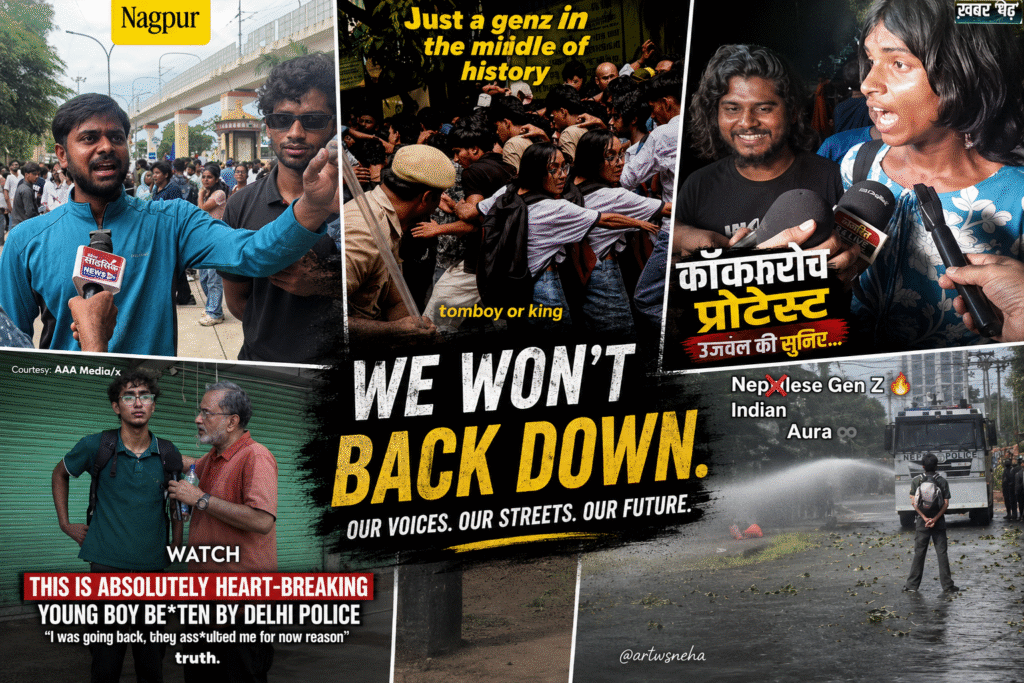
This generation really said, “If history is watching, let’s at least make it entertaining.” They aren’t treating protests like a festival—they’re refusing to let fear become the dress code. Water cannons? Someone starts dancing. Police barricades? Perfect place to dry rain-soaked clothes. Lathi charge? Bruises fade, but silence leaves deeper scars. Somehow, this generation has mastered the impossible art of being deadly serious about the cause while looking completely unbothered by the intimidation. They chant, they organize, they clean up after themselves, they fact-check, they carry first-aid kits—and then casually turn the entire day into memes before going to bed. That’s not immaturity; that’s emotional resilience with Wi-Fi. Previous generations marched with slogans. This one marches with slogans, reels, sarcasm, power banks, and an almost offensive refusal to let fear steal their sense of humor. Maybe that’s what unsettles people the most—not that today’s youth are protesting, but that they’re smiling while doing it. Because when a generation can laugh in the face of water cannons, turn barricades into clotheslines, and wear every bruise as proof that they stood up for something bigger than themselves, you’ve got more than protesters. You’ve got a generation that refuses to confuse courage with looking miserable.
When Real Patriotism Showed Up Beyond Trends
This blog could never mention every hero because patriotism doesn’t come with attendance sheets. So here’s a salute to every generation that stood shoulder to shoulder, to every person who travelled from another city, another state, or even another country just to stand for what they believed was right. To the independent Instagram journalists who reported when cameras looked away, to the people serving food and water, the volunteers carrying first-aid kits, the strangers opening their homes, the ones editing and sharing videos behind the screen, the lawyers, doctors, students, workers, parents, and every silent supporter who chose truth over convenience—this tribute belongs to you too. When the system looked broken, humanity quietly fixed what it could. For one brief moment, India stopped asking, “Where are you from?” and started asking, “Are you okay?” Religion stepped aside. States blurred. Languages mixed. Genders became irrelevant. Every version of Homo sapiens remembered they were simply human first. Maybe this is the India we keep searching for—not the one shouting the loudest, but the one standing together when it matters the most.
The Hardest Part of a Protest? Watching It Through a Screen (why Teleportation Still Isn’t Available..😒)
The silent guilt of supporting India’s youth protest from behind a screen.
The absolute worst part of watching a revolution live on your feed is the soul-crushing, high-voltage guilt of seeing it from behind the screen while the other people are out there battling water cannons, scorching heat, lathi charge and tear gassed. You’re trapped behind a mountain of plain old geographical distance. You desperately want to be on those dusty streets, holding a snappy banner and shouting until your vocal cords give up, but instead, you’re furiously retweeting, sending Swiggy water orders to Jantar Mantar, and glaring at your laptop screen like it personally leaked the paper. To every single person out there taking the heat: Trending Talez and a million sidelined hearts are standing right behind you. We might be physically absent, but emotionally? We are right there in the front row, cheering for India’s youth, amplifying every single chant, and carrying your voice as far as our Wi-Fi can stretch.
So, while Trending Talez couldn’t march beside you, consider this our virtual placard. To every protester who walked peacefully, every young voice that kept the movement alive, and every generation that chose hope over silence, we’re cheering for you from the sidelines. Democracy needs people on the streets. It also needs people making sure those streets are never forgotten.