
How Artificial Intelligence Is Already Controlling Your Daily Life.
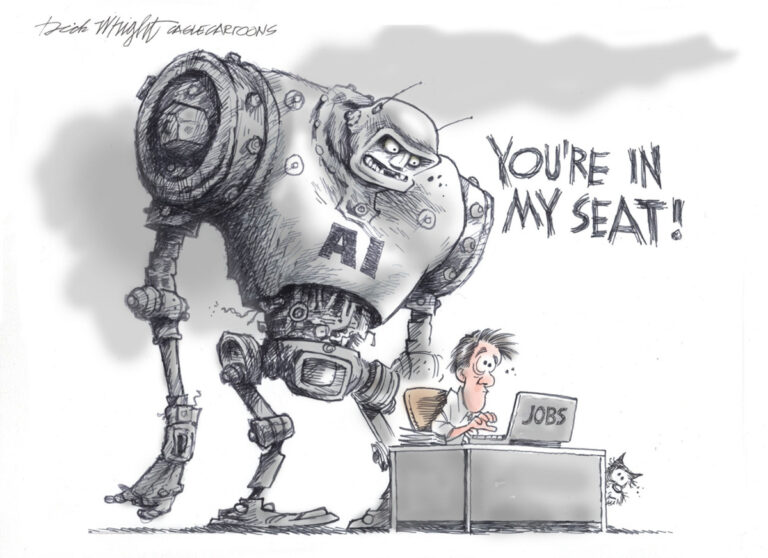
You probably imagine artificial intelligence taking control like this: a robot wakes up one morning, looks at humanity and says, “Right. Everyone report to the nearest charging station.” Fortunately, we are not quite there yet.
AI control is much less dramatic. It looks like Netflix recommending another episode when you promised yourself you would sleep, Instagram discovering the exact content that keeps you scrolling, Google Maps suggesting a route before you realise traffic has become a personal attack, or Amazon showing you the product you were definitely not planning to buy five minutes after you searched for something similar.
Nobody is forcing you to click or physically making the decision for you. That’s precisely what makes artificial intelligence so influential.
AI doesn’t necessarily need to control your decisions. It can influence the choices surrounding them.
From the moment you wake up to the moment you finally put your phone down, AI-powered systems can predict, recommend, rank and personalise what you see and do. The surprising part is that you probably don’t notice most of it.
Is AI Really Controlling You?
Let’s get one thing straight before we blame the machines for every questionable decision we’ve made since breakfast: AI isn’t literally controlling your life.
Your phone isn’t sitting in your pocket whispering, “Buy the expensive one.” Modern artificial intelligence systems generally work by analysing data, recognising patterns and making predictions. Based on those predictions, digital platforms decide which content, products, advertisements, routes or recommendations may be most relevant to you.
That’s influence, not mind control. However, influence can become surprisingly powerful when it happens thousands of times.
Think about the basic AI feedback loop:
Your behaviour → Data → Prediction → Recommendation → Your reaction → More data
You watch a certain type of video, the system notices, and it recommends something similar. You watch that too, giving it more information about you, so it recommends something even more specific. Congratulations: you have just trained the algorithm while believing you were merely procrastinating.
To understand why this process works, it helps to learn how Machine learning works.

How AI Learns From Your Behaviour
AI systems don’t need to know everything about you personally. They can learn a great deal from patterns in your online behaviour: what you search for, click, ignore, watch, buy and repeatedly return to.
These signals help AI systems predict what you might want next. That’s why two people can open the same app and see completely different content. Your internet isn’t necessarily the internet. It is increasingly your personalised version of the internet.
Personalisation can be useful because it saves time, filters irrelevant information and makes digital services easier to use. But when an AI system becomes very good at predicting what will hold your attention, it can also become very good at keeping your attention.
That is where artificial intelligence becomes more than a convenience tool. It becomes part of the environment shaping your daily decisions. This same shift is changing workplaces, hiring and career planning, which raises a related question: is artificial intelligence taking our jobs? The answer is more complicated than a simple yes or no, but the underlying issue is similar: AI is increasingly influencing the choices people and organisations make.
Your Morning Already Belongs to Algorithms
Your relationship with AI may begin before you’ve even properly opened your eyes. Your smartphone wakes you up, your weather app tells you whether you need an umbrella, your navigation app estimates your journey, your news feed decides which stories deserve attention, your fitness app tracks your activity, your email service filters spam, and your phone organises photos and may recognise faces.
None of this feels particularly futuristic anymore because technology becomes invisible once we get used to it. Twenty years ago, some of these features would have sounded remarkably advanced. Today, you simply get annoyed when your phone takes three seconds longer than expected.
Many modern digital services use algorithms and machine-learning models to predict, classify, filter or personalise information. Your morning hasn’t been taken over by a robot. It’s been optimised by software, which is somehow less terrifying and more unsettling at the same time.
You haven’t even brushed your teeth, and an algorithm already has a rough idea of what you are likely to care about today.
Social Media Doesn’t Read Your Mind. It Reads Your Behaviour.
This is where AI’s influence becomes much harder to ignore. Open a social media app and you’ll rarely see posts in simple chronological order. Instead, platforms use recommendation algorithms to decide what appears in your feed.
They may consider what you watch, like, share, comment on, search for or skip, which accounts you follow and how long you stay on particular content. One signal can be surprisingly useful: hesitation.
You don’t have to like something for an AI system to learn from your interaction with it. If you stop scrolling and watch something longer than usual, that behaviour can provide a signal. If you repeatedly interact with a particular subject, the system can learn that you’re interested.
AI doesn’t need to read your mind. It reads your behaviour. That’s enough to make your social media feed increasingly personalised. Once the system learns what keeps your attention, it can keep offering more of it.
You wanted to check one notification. Three hours later, you’re watching a stranger explain how they renovated a refrigerator in rural Norway. Technology has truly advanced.
Search Engines Decide What Gets Your Attention
When you search for something online, you probably imagine you’re simply asking a question and receiving an answer. It’s a little more complicated.
Search engines use sophisticated ranking systems to determine which results should appear first. Relevance, quality, context and personalisation can all matter. Depending on the service and situation, factors such as location, language, previous behaviour and search intent may influence the results or recommendations you encounter.
This doesn’t mean an AI system is secretly deciding what you’re allowed to know. But it does mean something important:
You don’t necessarily see every possible piece of information. You see what the system considers most relevant.
Finding information and deciding which information gets your attention first are two different things. Humans often stop looking once they find something that seems good enough. The algorithm doesn’t need to control your conclusion. Sometimes it only needs to influence your starting point.
Streaming Algorithms Know What You’ll Probably Watch Next
You finish a show and Netflix suggests another. You listen to a song and Spotify recommends something similar. You watch one YouTube video and suddenly your homepage looks like it was designed by someone who has been spying on your brain.
That’s the purpose of AI recommendation systems. They analyse patterns and attempt to predict what you’re likely to enjoy. The more you interact with a streaming platform, the more information it can use to personalise future recommendations.
This creates a feedback loop:
You watch → the system learns → it recommends → you watch again → it learns more.
Recommendations are useful. Without them, you’d spend half your evening searching through thousands of videos wondering what to watch. The more important question is:
How much of your attention is being guided by AI recommendations before you consciously decide what you want?
You said you were going to watch something for ten minutes. The algorithm interpreted that as a legally binding commitment to finish an entire season.
Online Shopping: The Algorithm Wants You to Buy Something
Online shopping has another advantage over traditional shopping: the store can learn from your behaviour.
You search for running shoes, look at three pairs and leave without buying anything. Then you start seeing running shoes everywhere. Suddenly your internet experience becomes:
“Hey, remember those shoes?”
“Still thinking about those shoes?”
“What if you bought the shoes?”
“Here are some socks to go with the shoes.”
AI-powered recommendation systems can use behavioural patterns to suggest products, advertisements and related items. This can make online shopping faster, but it can also make impulse buying easier.
The system doesn’t need to know that you are bored, stressed or procrastinating. It can simply notice that you have repeatedly interacted with a particular product category. That’s enough.
The line between helpful product recommendation and effective persuasion can become surprisingly thin. You didn’t need that seventh black T-shirt, but apparently the algorithm believed your wardrobe was facing an emergency.
Maps Are Quietly Making Decisions For You
Remember when getting somewhere required asking a human being who would confidently point in a completely random direction? Those days are mostly gone.
Navigation apps analyse traffic conditions, estimate travel times and recommend routes. You still technically choose where to go, but consider the process: the app presents certain routes first, estimates how long each will take, warns you about traffic and may automatically reroute you when conditions change.
You make the final decision, but the AI-powered navigation system heavily influences the options you’re considering.
That’s a recurring theme with artificial intelligence. It doesn’t always make the decision. Sometimes it decides what the decision looks like. And that’s a much subtler form of influence.
Your Smart Home Knows Your Routine
Smart home devices promise convenience. Lights can turn on automatically, thermostats can adjust temperatures, smart speakers can respond to commands, security cameras can detect activity, and apps can learn routines and automate repetitive tasks.
It’s genuinely useful. Nobody wants to manually perform seventeen steps every evening just to turn off the lights.
But convenience requires information. A smart device that learns your routine needs some understanding of that routine: when you wake up, when you’re usually home, which devices you use and what patterns repeat.
The more connected your home becomes, the more information it can potentially generate about how you live. That doesn’t automatically mean someone is sitting in a secret office watching you eat breakfast, but it does mean that privacy becomes more complicated as technology becomes more personalised.
The smarter your home becomes, the more important it is to understand what it knows, why it knows it and who can access that information.
AI Can Influence What Information You See
This is where the conversation becomes bigger than shopping recommendations and funny cat videos.
AI-powered recommendation and ranking systems can influence the information people encounter online. If a system repeatedly recommends similar viewpoints, topics or types of content, your digital environment can gradually become narrower.
You may start with one opinion, then see another similar opinion, followed by another. Eventually, your feed can make it feel as though everyone thinks the same way you do.
They don’t. Your algorithmic environment simply isn’t a perfect representation of reality.
This matters because humans are already vulnerable to confirmation bias. We naturally pay more attention to information that supports what we already believe, and personalised recommendation systems can reinforce that tendency.
The danger isn’t necessarily that “AI will tell everyone what to believe.” It’s subtler: AI can help determine what people repeatedly encounter.
Repeated exposure can influence what feels familiar, important or normal. The machine doesn’t have to write your opinion. It can help choose the room in which your opinion develops.
The Real Currency Is Your Attention
There is one thing connecting almost everything we’ve discussed: your attention.
Social media wants it. Streaming platforms want it. Advertisers want it. Shopping platforms want it. News websites want it. Apps want you to open them again tomorrow.
The longer you stay, the more opportunities there are for engagement, advertising, purchases or further interaction. This doesn’t mean every company is secretly plotting to steal your soul between two advertisements for protein powder. It means digital platforms have incentives, and AI can make them better at predicting what will keep you engaged.
That’s why personalised systems can feel strangely addictive. They aren’t randomly showing you things. They’re increasingly learning which things you are likely to respond to.
When technology gets very good at predicting human attention, the question changes. It’s no longer simply:
“What does AI know about me?”
It’s:
“What is AI trying to get me to do with my attention?”
That’s a much more useful question.
Is AI Helping You or Manipulating You?
AI isn’t automatically good or bad. The same basic technology can be used for convenience, persuasion or something much more questionable.
Helpful AI Personalisation
AI can help you find relevant information, filter spam, navigate traffic, discover music, translate languages, improve accessibility and organise information. That’s useful. Nobody wants to return to the glorious technological era of manually searching through 400 pages of websites.
Persuasive AI Personalisation
Things become more complicated when systems are designed around influencing behaviour. Examples include personalised advertising, shopping recommendations, engagement-focused social media feeds, targeted promotions and streaming content recommendations.
These features aren’t necessarily harmful, but they are designed to increase the likelihood of certain actions.
Potentially Problematic AI Personalisation
Problems can arise when AI systems become opaque, excessively manipulative or exploitative. Concerns can include excessive personal data collection, manipulative recommendation algorithms, addictive engagement loops, highly targeted persuasion, algorithmic discrimination and a lack of transparency.
The important question isn’t simply:
“Is AI controlling us?”
It’s:
“Who designed the system, what is it optimising for and what information is it using?”
That question is considerably harder to answer, which is precisely why it’s worth asking.
Common Myths About AI Controlling Your Life
Myth 1: AI Can Read Your Mind
No. AI doesn’t need supernatural brain-reading powers. It can make surprisingly accurate predictions from behavioural patterns and available data. There’s a big difference.
Myth 2: Everything Automatic Is AI
Not necessarily. A simple automatic light switch isn’t suddenly artificial intelligence because it turns itself on. Automation can be completely rule-based. AI and machine learning involve more sophisticated forms of pattern recognition, prediction or decision-making.
Myth 3: AI Makes Every Decision For You
Usually, no. Most consumer AI systems influence, rank, filter or recommend rather than literally make every decision. You still decide whether to click, buy or watch another episode. The problem is that the environment around those decisions can be heavily personalised.
Myth 4: “I Don’t Use AI”
You might not consciously use an AI chatbot every day, but you may still interact with AI-powered or machine-learning-based features through search engines, social media platforms, recommendation systems, spam filters, navigation apps, photo tools and other digital services.
You don’t necessarily need to open an AI app. AI can already be embedded inside the apps you use.
Myth 5: AI Is Automatically Evil
Also no. AI can be incredibly useful. The technology itself isn’t the entire story.
The incentives, design choices, data practices and goals behind the technology matter.
A recommendation system helping you discover a useful book is very different from a system aggressively optimising for endless engagement. Same broad technological family, very different purpose.
How to Take Back Some Control From AI
You don’t need to throw your smartphone into a river and move into a forest, although after six hours of scrolling, the river may deserve consideration. You can take smaller steps to reduce algorithmic influence and protect your privacy.
1. Review Your Privacy Settings
Check what apps can access and whether they actually need those permissions. Review location access, microphone permissions, contact access, advertising settings and activity tracking.
2. Turn Off Unnecessary Notifications
Not every app needs to announce its existence every six minutes. Your phone can survive without sending you a breaking alert about something you don’t care about.
3. Question AI Recommendations
When an algorithm repeatedly shows you something, ask:
“Do I actually want this, or have I simply been shown it enough times?”
That’s a surprisingly powerful question.
4. Diversify Your Information Sources
Don’t rely entirely on one social media feed, one search result or one recommendation system. Compare different sources and deliberately look beyond personalised content.
5. Be Careful With Impulse Purchases
If an algorithm keeps showing you something, that doesn’t mean the universe wants you to buy it. It may simply mean the recommendation system is doing its job.
6. Understand Platform Incentives
Ask what the platform benefits from: more purchases, more clicks, more viewing or more time spent? Understanding the incentive makes the recommendation easier to interpret.
7. Use Digital Wellbeing Tools
Set screen-time limits, remove distracting apps from your home screen and schedule periods without notifications. You don’t have to defeat every algorithm. You simply need to make it slightly harder for algorithms to make every decision for you.
So, Is AI Actually Controlling Your Life?
Not in the dramatic science-fiction sense. There probably isn’t a secret AI headquarters where twelve robots sit around a glowing table discussing whether you should order pizza tonight.
But something more subtle is happening.
AI-powered systems can increasingly predict what you might want, recommend what you might watch, rank what you might see, suggest where you might go and personalise what gets placed in front of you.
You still make the final decision, but your decisions don’t happen in a vacuum. They happen inside an environment increasingly shaped by artificial intelligence and algorithms.
One recommendation isn’t control. One advertisement isn’t control. One suggested video isn’t control. But thousands of tiny recommendations, predictions and nudges can gradually influence what you notice, what you consider and where you spend your attention.
AI doesn’t necessarily need to control your life. It only needs to influence enough of the tiny decisions that make up your life.
Perhaps that’s the more important question for the future, Not “Will AI take control?” But, “How much control are we willing to hand over because convenience feels really, really good?”
The future probably won’t arrive with a robot knocking on your door. It’ll arrive as a little notification saying: “Recommended for you.” And, let’s be honest, you’ll probably click it.




3 Comments