How Far Can AI Actually Go?
We Asked AI to Make Life Easier. It Started Making Decisions for Us.
Remember when AI was supposed to be a cute little robot answering questions, doing boring work and politely pretending your email was “clear and professional”? Adorable. Now AI is busy hiding inside the systems that make predictions, recommendations, rankings and decisions about what people see, buy, watch, read and, occasionally, whether they look employable enough to survive another round of corporate recruitment.
And here’s the charming part: you don’t always know when you’re interacting with AI. You might think you’re choosing what to watch, but an algorithm has already prepared a carefully engineered buffet of content, then acted surprised when you ate the entire thing. You might think you’re searching the internet, but AI-powered systems are increasingly deciding which information gets placed in front of you first, because apparently even curiosity now needs a middle manager. You might think you’re applying for a job, while automated systems sort, rank or analyse candidates—possibly judging your résumé for using the phrase “team player” one too many times. You might think you’re scrolling for five minutes. Congratulations. The algorithm has interpreted that as a long-term relationship.
This doesn’t mean AI is secretly controlling your brain like a sci-fi villain in a basement whispering, “Watch another reel.” The reality is less dramatic and more irritating: AI is becoming part of the infrastructure around human decisions, quietly influencing what gets noticed, recommended, prioritised and ignored. AI is not necessarily taking over the world. It is helping organise the world while insisting it has no opinions.
And that changes the question. The question is no longer simply “What can AI do?” It is: How far can AI actually go before we start calling its decisions “efficient” instead of asking whether they make sense? What happens when AI moves from a tool we consciously use to technology quietly operating in the background? Which industries will be transformed? Which skills will become valuable? Which jobs will exist when machines can handle more repetitive work, generate confident nonsense in seconds and occasionally need a human to explain that “make it sound more human” does not mean adding three exclamation marks?
Should you actually learn AI—or are you about to buy another expensive course promising to turn you into an “AI expert” after seven weekends, twelve PDFs and one suspiciously enthusiastic testimonial from a man named Brad? And what does the world look like when AI isn’t something futuristic anymore, but something woven into our homes, workplaces, cities, schools and everyday decisions?
Will that future be incredibly convenient? Will it be terrifying? Or will humans do what humans usually do with powerful technology: complain about it, depend on it, blame it when something goes wrong and then panic when the Wi-Fi stops working?
This isn’t another “AI is the future” article. We know. The future has been sending us notifications, recommending products and asking us to accept cookies for years. We’re going further.
We’re looking at where AI is actually heading, what its growing scope means for careers and human skills, whether learning AI is worth your time, what kinds of jobs could survive or emerge, and what an AI-powered future might really look like.
And somewhere along the way, we’ll ask the slightly inconvenient question nobody can completely avoid:
If AI keeps getting better at making things easier for us, how much control are we willing to give up in exchange for convenience—and how much of our attention are we willing to donate to a machine that still occasionally thinks a toaster is a type of sandwich?
How Did AI Go From Assistant to Decision-Maker?
AI started as something we consciously used. You opened a chatbot, asked a question, got an answer, closed the tab and went back to pretending you were definitely about to do the work yourself.
But AI becomes far more powerful when we stop noticing it. First, AI helps you. Then it recommends something. Then it performs a task. Eventually, it influences decisions without feeling like “AI” at all.
Think about your banking app detecting fraud, Google Maps choosing your route, a hiring platform filtering candidates, a hospital system assisting diagnosis, or Netflix deciding what you should watch next. You aren’t necessarily “using AI.” You’re simply using technology that quietly shapes what happens next.
And that’s where things get interesting.
“AI suggested this” is assistance.
“The system decided this” is authority.
The worrying part? Humans have a remarkable talent for trusting anything that arrives with a clean dashboard and a percentage score.
AI doesn’t need to walk into your house and announce, “I am taking over.” It can simply become so normal that you stop asking who is making the decision — you or the system?
If you want to see how much of this is already happening, read How Artificial Intelligence Is Already Controlling Your Daily Life.
Because the real future of AI may not look like robots replacing humanity. It may look much more ordinary: you wake up, follow a recommended route, watch recommended videos, read recommended news, buy a recommended product and make dozens of choices quietly influenced by systems you never consciously noticed.
No robot invasion. No dramatic takeover. Just humans outsourcing tiny decisions until they forget they were making them in the first place.
How Far Can AI Actually Go?
AI can already write emails, generate images, summarise documents, translate languages, produce code, analyse data and recognise patterns across enormous datasets. It can assist with medical imaging, fraud detection, scientific research, customer service, manufacturing, logistics and engineering—processing information at a scale a human employee simply couldn’t manage manually.
But capability doesn’t automatically mean independence. AI can be brilliant at recognising patterns while still failing to understand whether its conclusion makes sense in the real world. It can generate an elegant explanation and confidently get a basic fact wrong, producing convincing nonsense in the tone of someone who has never once been interrupted by reality.
So the important question isn’t just “Can AI do this?” It’s “Should AI do this—and what happens when we let it do it and it gets it wrong?” AI is particularly powerful when a task involves huge amounts of information, repetitive processes, prediction or pattern recognition. But human judgment still matters when a situation involves context, responsibility, ethics, uncertainty or consequences that can’t simply be reduced to a number.
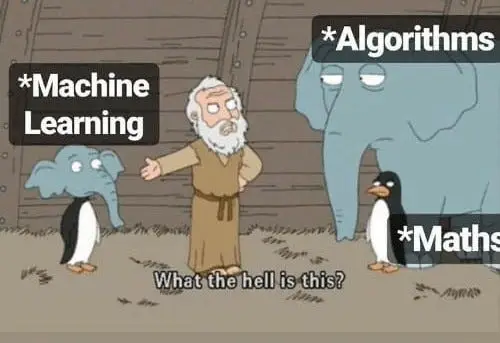
That’s why understanding the basics matters. If you’re confused about the difference between AI, machine learning and the systems underneath them, don’t worry. We’ve already broken that down without requiring you to sacrifice your weekend to mathematical suffering in Machine Learning Explained for People Who Hate Math.
The important thing is simple: AI becoming more capable doesn’t automatically mean humans should give it more authority. A calculator can calculate faster than you. That doesn’t mean you let it decide your budget.
Should You Learn AI—or Is Everyone Just Panicking?
Open LinkedIn for five minutes and apparently you’re already unemployed. Someone is learning machine learning, someone has completed three AI certifications, and someone has become an “AI strategist” despite discovering ChatGPT approximately six weeks ago. Somewhere between the motivational posts and aggressively smiling course instructors comes the question: Do I actually need to learn AI?
Probably yes. But that doesn’t mean everyone needs to become an AI engineer. “Learning AI” can mean very different things depending on what you do. A software developer may need AI APIs, large language models and AI-assisted development. A data professional may need machine learning and statistics. A designer can use generative AI for ideation, while a teacher can use it for lesson planning and personalised learning. Marketers can use AI for research and automation, while business professionals may need to understand which processes should be automated and which should remain under human control.
So before asking “Which AI course should I buy?”, ask “What do I actually want AI to help me do?” Because the internet has somehow convinced people that buying an AI course is the same thing as having an AI career. It isn’t. You can collect ten certificates and still have no idea how to evaluate an AI system. At that point, you don’t have an AI career. You have a very confident-looking folder.
What Should You Actually Learn?
If you’re starting from zero, focus on the fundamentals: what AI actually means, how machine learning fits into it, how AI systems learn patterns from data, what generative AI can and cannot do, why AI produces incorrect information, the difference between algorithms and models, how to verify AI-generated information, and where human judgment is still necessary.
If you want a technical career, go deeper into programming, statistics, mathematics, machine learning and practical AI development. If you’re already working in another profession, don’t automatically abandon it because AI exists. Instead, think about AI + your existing expertise: AI + engineering, healthcare, finance, education, law, design, cybersecurity, manufacturing or business.
The person who understands both the technology and the problem may be far more useful than someone who simply knows how to generate impressive prompts. Prompting is useful. Knowing whether the answer is ridiculous is more useful.
AI Is Changing Faster Than Humans Can Keep Up
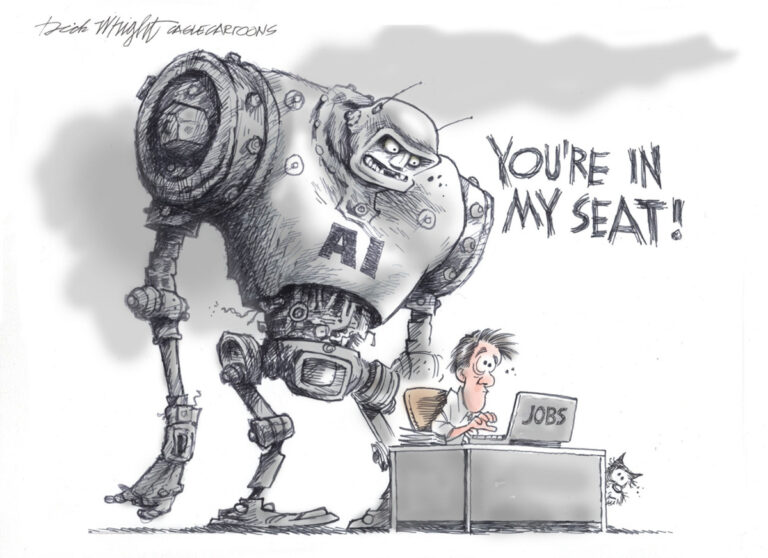
And here’s the part nobody really expected: AI isn’t just changing the world. It’s changing it ridiculously fast. Humans spend years learning a skill, only to wake up one morning and discover that AI has decided that skill is now available in a dropdown menu. Spend years analysing data? Congratulations, the machine has been doing it before your coffee gets cold.
The ridiculous part is that we barely finish learning one thing before AI starts making the next thing cheaper, faster or easier. Yesterday, a skill made you valuable. Today, it’s “AI-assisted.” Tomorrow, someone will probably make a course explaining why that skill is dead, followed by another course teaching you how to use AI to replace it.
And AI isn’t waiting politely for humans to catch up. It’s running ahead while we’re still reading the tutorial. That’s why the goal shouldn’t be trying to predict exactly which individual skills will survive. The smarter move is learning how to adapt, keep learning and combine technology with something AI can’t simply download from a course: real-world experience, judgment, context and responsibility.
Because if AI keeps evolving at this speed, the most dangerous career strategy might be becoming extremely good at one thing that technology is currently learning how to do.
Will AI Take Your Job—or Just Change What Your Job Means?
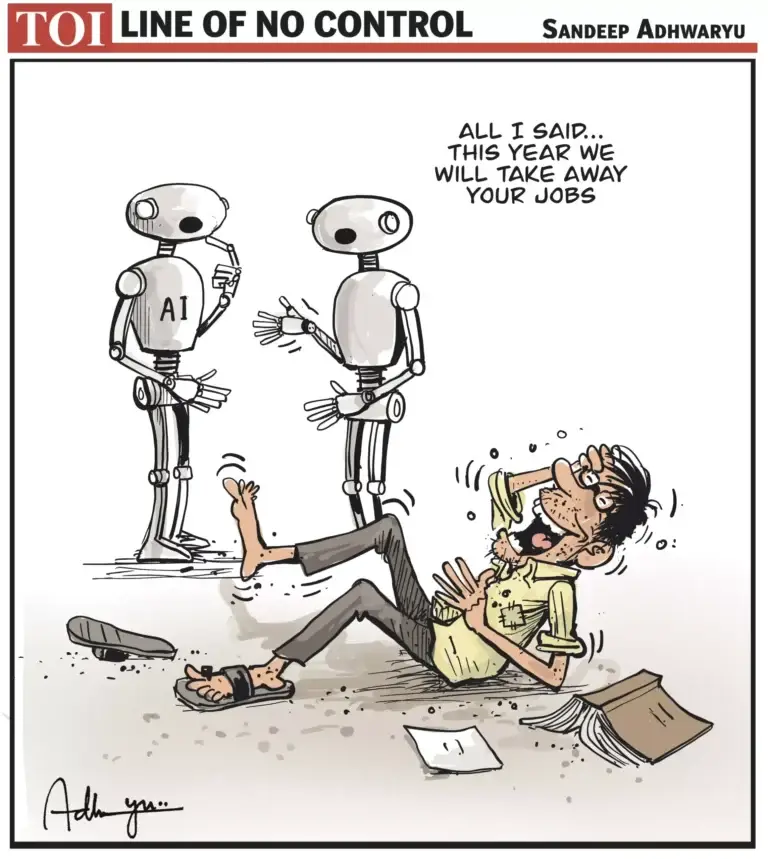
Here’s the question hiding underneath almost every AI conversation: “Fine. AI is getting better. But what am I supposed to do for a living?” Nobody wakes up excited about becoming professionally obsolete. Yet every time AI improves at something, the internet produces two camps: “AI WILL TAKE ALL OUR JOBS” and “AI WILL CREATE MORE JOBS THAN IT DESTROYS.” Both sound remarkably confident for people who haven’t actually been given access to the future.
The reality is more complicated. Some jobs may shrink, some will change, some may disappear, and new roles will appear—possibly jobs that don’t even have proper names yet. The bigger change may not be human versus machine, but humans using AI versus humans refusing to adapt.
Imagine two employees. One spends three hours manually preparing a report. The other uses AI and automation to produce a first version in thirty minutes, then spends the remaining time checking the results and improving the work. The machine didn’t necessarily replace the second employee. It made that employee faster. And suddenly the competition isn’t you vs AI. It’s you vs someone who knows how to work with AI better than you do.
For a deeper look at whether AI is actually replacing workers or simply exposing inefficient ways of working, read Is Artificial Intelligence Taking Jobs or Exposing Bad Work?.
The future job market may contain more roles involving AI engineering, data, robotics, AI security, automation, AI research, AI product development, governance and human-AI interaction. But it won’t consist entirely of people sitting in dark rooms training robots while drinking suspicious amounts of coffee.
AI will also need people who understand specific industries: healthcare professionals who understand healthcare and AI, engineers who understand physical systems and AI, teachers who understand students and AI, lawyers who understand regulation and technology, and business professionals who understand processes and automation.
That’s why the more useful career question may be: “What becomes more valuable when AI handles more routine work?” The answer includes judgment, communication, domain expertise, problem-solving, adaptability and responsibility.
In other words, don’t compete with AI at being a machine. Get better at being the human who knows what the machine should—and shouldn’t—be doing.
What If the Most Valuable Skill of the Future Isn’t an AI Skill?
Imagine a future where almost everyone has access to powerful AI. Everyone can generate text, analyse information, create images, get software assistance and have a digital helper. So what separates one person from another? Probably not knowing how to open an AI chatbot. That’s not a skill. That’s Tuesday.
The real advantage may come from everything surrounding the technology: knowing which problem matters, which information matters, what question to ask, whether the answer makes sense and when not to use AI at all. Imagine two people using the same AI system. Person A says, “Write me a marketing strategy.” Person B understands the business, knows the customers, identifies the actual problem and asks specific questions. Same machine. Very different results. The technology wasn’t the difference. The human was.
This is why domain expertise may become more important, not less. An engineer who understands engineering and AI may be more valuable than someone who understands AI but doesn’t understand what they’re building. A doctor can recognise when an AI-generated recommendation doesn’t fit a patient. A teacher can spot when an AI-generated lesson is nonsense. A business professional can recognise when a process shouldn’t be automated in the first place.
The future skill stack may therefore look something like domain expertise + AI literacy + critical thinking + communication + adaptability. Not exactly the glamorous “learn one prompt and earn ₹10 lakh per month” fantasy the internet keeps selling, but considerably more realistic.
And perhaps the most important skill will be knowing when to reject AI. Not everything needs automation. Some decisions require accountability, some conversations require empathy, and some creative work requires genuine human intention. Sometimes the smartest use of AI is deciding not to use it.
What Would an AI-Powered World Actually Look Like?
Forget flying cars for a moment. We have enough problems before we start commuting to work in spaceships.
Imagine waking up in a home where AI manages temperature, electricity, security and household devices. Your transport system has already calculated the fastest route, your workplace has processed routine reports before you open your laptop, your doctor uses AI-assisted systems to process medical information, your child’s learning platform adapts lessons to their progress, your bank monitors suspicious transactions, your shopping platform predicts what you might need, and your city uses algorithms to manage traffic and energy demand.
Does that sound like the future—or just a slightly smarter Tuesday?
AI may not arrive as one giant transformation. It may arrive one automated system at a time: one recommendation, one prediction, one assistant, one workplace tool, one smart device. Eventually, you look around and realise AI isn’t something you use anymore. It’s part of the environment you live in.
And there is a genuinely exciting version of that future. Doctors could have better tools, engineers could test thousands of design possibilities faster, scientists could process enormous datasets, students could receive personalised support, dangerous industrial tasks could be automated, and people with disabilities could gain new ways to communicate. Administrative work could take less time, leaving humans more room for judgment, creativity and complex problem-solving.
But there is another version. Your home knows your routines. Your workplace monitors productivity. Your car knows where you go. Your shopping system predicts what you buy. Your entertainment system predicts what keeps you watching. Your financial systems analyse your behaviour. Suddenly, the futuristic question isn’t “Can AI make my life easier?” It probably can. The question is “How much of my life am I willing to hand over in exchange for that convenience?”
Because a smarter world isn’t automatically a better world. A perfectly optimised system can still make terrible decisions. A personalised system can still know too much. An automated workplace can be productive while making people miserable. A recommendation system can show you exactly what you enjoy while quietly shrinking what you discover. And an AI system can make a decision in milliseconds while giving you no satisfying answer when you ask the most human question of all:
“Why?”
What Happens When Convenience Knows Too Much About You?
There is a small word hiding underneath almost every intelligent system: data. AI needs information to make useful predictions, and the better a system understands your patterns, the more personalised those predictions can become. Sounds convenient—until you ask: how much does the system need to know about me to be useful?
We want personalised recommendations, faster services, devices that remember our preferences and AI assistants that understand context. We also want privacy. Humans have somehow decided that both should exist simultaneously. We click “Accept All” like the terms and conditions are decorative loading screens, hand over our location, behaviour, preferences, voice, contacts and browsing history, then act surprised when technology seems to know what we want.
The problem isn’t that every use of data is automatically evil. Fraud detection can protect people, traffic systems can save time, and AI-assisted tools can help doctors process information. The problem begins when convenience becomes so valuable that questioning the system starts feeling inconvenient.
What happens when “The algorithm says so” becomes an acceptable answer? Who checks the algorithm? Who decides what it should optimise? Who notices when it gets something wrong? And who remains responsible when humans become so comfortable with automation that they stop challenging it?
That’s where “smart” technology stops being merely convenient and starts becoming a question of power. The more a system knows about you, the more useful it can become—but potentially, the more influence it can have over you too.
And that leaves us with an uncomfortable trade-off: how much privacy are we willing to exchange for convenience?
What Happens When the Algorithm Gets It Wrong?
AI can sound extremely confident while being completely wrong. It can misunderstand context, invent information, reproduce patterns from biased data, misclassify people and make a recommendation that looks objective simply because it came from software.
That’s not a small problem when the decision involves someone’s job, money, healthcare, education, insurance or access to important services. Suddenly, “the system made a mistake” isn’t a funny chatbot story. It can affect someone’s future.
And humans have developed a wonderfully convenient response to situations like this: blame the AI, blame the person who used it, claim nobody was responsible, hold a meeting about accountability—and then use AI to write the meeting summary.
But the answer cannot simply be “the algorithm decided.” The algorithm didn’t choose its objective. People did. It didn’t choose its training data. People did. It didn’t choose where to deploy it. People did. A system designed to maximise engagement will optimise engagement. A system designed to minimise costs may recommend reducing costs. A system trained on historical hiring decisions may reproduce patterns from those decisions.
Sometimes the problem isn’t that the machine failed to follow instructions. It’s that humans gave it the wrong instructions and were surprised when it followed them perfectly.
That’s why AI accountability matters. We need to know who approved the system, what data it uses, what risks were identified, who audits it, when human review is required, whether people can challenge automated decisions and who can suspend the system when something goes wrong.
And “human oversight” shouldn’t mean that someone technically exists somewhere in the building while the machine makes every important decision. The human needs enough authority, knowledge and time to say:
“No. The machine is wrong.”
Otherwise, human oversight is just theatre.
Who Gets to Decide What AI Becomes?
This may be the biggest question of all. Not “Will AI become intelligent?” but “Who controls that intelligence?”
People build AI systems. People choose training data, define objectives and decide where systems are deployed. Companies determine how they are used, governments establish regulations, institutions decide how much authority automated recommendations receive, and users decide whether to trust, challenge or ignore the output. AI doesn’t magically create the future by itself. People create systems, and those systems reflect human choices.
That becomes particularly important when the objective itself is questionable. A system designed to maximise engagement may discover that outrage keeps people online, making outrage valuable. A system designed to reduce costs may discover that cutting staff improves the numbers. A system designed to identify suspicious behaviour may become extremely cautious and flag innocent people. The system might technically be doing exactly what it was designed to do.
And that’s the uncomfortable part: sometimes the failure isn’t the algorithm. It’s the objective.
Measurement doesn’t remove judgment. It hides judgment inside the decision about what to measure. Efficiency asks, “How quickly can we produce an outcome?” Responsibility asks, “What kind of outcome should we produce, who could be harmed, and what happens if we’re wrong?” The first question is easier to measure. That doesn’t make it more important.
A system can calculate the fastest route, but it cannot decide whether the destination is worth reaching. It can identify the cheapest option, but it cannot decide whether the human cost is acceptable. It can predict what people are likely to click, but it cannot decide whether they should have been shown it.
Those decisions remain human. And responsibility cannot disappear behind “That’s what the system recommended.” Every system has a history. Every model reflects choices. Every deployment serves someone. And every automated decision operates within a structure of power.
So What Should Humans Actually Do Now?
After all this talk about AI taking jobs, influencing decisions, collecting data and quietly becoming part of everything, here’s the practical question: “What are we supposed to do about it?”
Probably not panic. And definitely not buy every “Become an AI Expert in 30 Days” course that appears in your feed.
Instead, start with AI literacy. You don’t need to become an AI engineer, but you should understand what AI can do, what it can’t do and why it can be confidently wrong. At the same time, keep building real expertise. AI makes generic output easier, which makes genuine knowledge more valuable. If you understand engineering, medicine, design, finance, education, law or another profession deeply, learn how AI can strengthen that expertise rather than assuming AI has made your existing skills worthless.
Then learn to question the output. Fast doesn’t mean correct. Confident doesn’t mean accurate. Automated doesn’t mean objective. “AI said it” is not a source.
Protect your data too. Before giving an AI system access to personal, financial, professional or sensitive information, ask whether the convenience is worth the trade-off. And don’t automate everything simply because you can. Some tasks are repetitive and should probably be automated. Some decisions involve trust, empathy, responsibility or consequences that shouldn’t be handed over because software can technically handle them.
Most importantly, demand accountability. If an automated system affects someone’s job, money, access to services or other important opportunities, there should be a way to understand, challenge and appeal the decision. And learn to work with AI without becoming dependent on it.
Use AI as a tool. Don’t let it become your substitute for thinking.
Because the goal shouldn’t be humans becoming better at obeying machines. It should be humans becoming better at deciding when machines should be trusted.
The Future of AI Isn’t Just About Smarter Machines
AI may become extraordinarily capable. It may transform healthcare, engineering, education, finance, manufacturing, science, transportation and countless other industries. It may make work faster, create new careers, eliminate some tasks, make our homes smarter and our cities more efficient.
But none of that answers the most important question:
What should humans allow AI to decide?
Because intelligence isn’t the same thing as wisdom. Prediction isn’t the same thing as judgment. Efficiency isn’t the same thing as fairness. Automation isn’t the same thing as accountability. And convenience isn’t free.
The real challenge isn’t necessarily that machines will become smart enough to control humanity. The more realistic challenge is that humans may become comfortable enough with convenience to stop asking who is actually in control.
We may eventually live in a world where AI recommends what we watch, helps decide who gets hired, detects financial risks, assists doctors, manages traffic, organises our work and predicts what we want before we even ask.
And perhaps the most dangerous sentence in that future will be:
“That’s just what the system decided.”
Because systems don’t simply decide. People design them. People choose their objectives. People choose where they are used. People decide how much authority they receive. And people decide whether their decisions can be challenged.
So perhaps the future we should worry about isn’t one where machines decide what humanity becomes.
Perhaps it’s one where humans use machines to avoid admitting that they decided.
And if AI really is going to make our lives easier, let’s make sure it doesn’t also make us less willing to think.